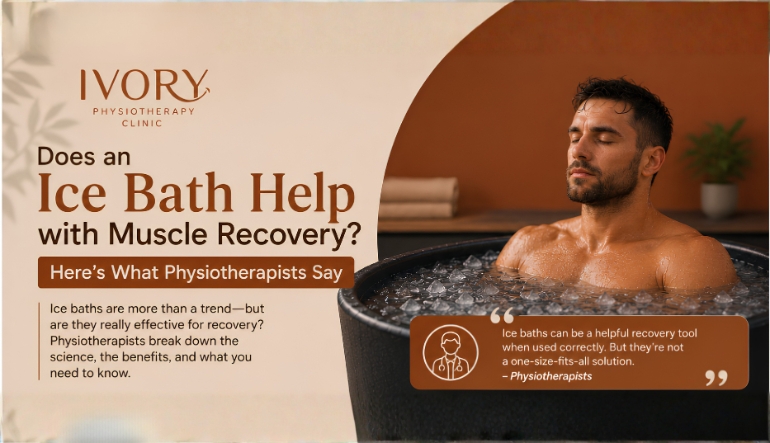
Does an Ice Bath Help with Muscle Recovery? Here's What Physiotherapists Say
After an intense workout, it's normal to experience muscle soreness, stiffness, and fatigue.
Many athletes and gym enthusiasts turn to ice baths for muscle recovery, hoping to bounce back faster before their next training session.
But do ice baths actually work?
The answer is yes, but with some important limitations.
Research shows that cold water immersion can reduce muscle soreness and improve short-term recovery, especially after high-intensity exercise or endurance sports. However, it is not a replacement for proper rehabilitation, strength training, or physiotherapy.
What Happens to Your Muscles After a Workout?
Intense exercise creates tiny tears in muscle fibers, which is a normal part of building strength.
This process triggers inflammation and muscle soreness known as Delayed Onset Muscle Soreness (DOMS).
| What Happens After Exercise | Effect |
|---|---|
| Microscopic muscle damage | Muscle repair begins |
| Inflammation | Temporary soreness |
| Fluid accumulation | Swelling and stiffness |
| Muscle fatigue | Reduced performance |
These changes usually peak between 24 and 72 hours after exercise.
What Is DOMS?
| Feature | Description |
|---|---|
| Full Name | Delayed Onset Muscle Soreness |
| Starts | 12 to 24 hours after exercise |
| Peaks | 24 to 72 hours |
| Symptoms | Pain, stiffness, tenderness, reduced strength |
DOMS is a normal response to unfamiliar or high-intensity exercise.
How Does an Ice Bath Help?
An ice bath after the gym involves immersing the body in cold water, usually between 10°C and 15°C for around 10 to 15 minutes.
The cold temperature slows blood flow temporarily, reduces nerve sensitivity, and limits excessive inflammation. As the body warms up afterward, circulation improves again.
Effect of Ice Bath
| Effect of Ice Bath | Recovery Benefit |
|---|---|
| Reduced inflammation | Less muscle soreness |
| Lower tissue temperature | Reduced swelling |
| Slower nerve conduction | Temporary pain relief |
| Rewarming circulation | Supports recovery |
Benefits of Ice Baths for Muscle Recovery
| Benefit | Why It Helps |
|---|---|
| Reduces DOMS | Less soreness after exercise |
| Helps recovery after intense workouts | Faster return to training |
| Reduces muscle swelling | Better comfort |
| Decreases pain perception | Easier movement |
| Improves recovery during competitions | Useful for athletes with frequent events |
These benefits are most noticeable after endurance events, team sports, and high-volume training.
When Should You Use an Ice Bath?
| Best Situation | Reason |
|---|---|
| After marathon or long run | Reduces muscle soreness |
| After high-intensity interval training | Controls inflammation |
| During sports tournaments | Faster recovery between events |
| Heavy training weeks | Reduces accumulated fatigue |
When an Ice Bath May Not Be the Best Choice
Although effective for recovery, ice baths are not ideal after every workout.
| Situation | Recommendation |
|---|---|
| Goal is maximum muscle growth | Use selectively |
| Light workout | Active recovery may be enough |
| Cardiovascular conditions | Consult a healthcare professional |
| Cold intolerance | Avoid without medical advice |
Some studies suggest frequent cold water immersion immediately after strength training may slightly reduce muscle-building adaptations.
Ice Bath vs Active Recovery
| Ice Bath | Active Recovery |
|---|---|
| Reduces soreness | Improves circulation |
| Helps control inflammation | Maintains flexibility |
| Useful after very intense exercise | Ideal after moderate workouts |
| Passive recovery | Gentle movement based recovery |
The two methods often work best when used together.
Why Physiotherapy Is Still Essential
An ice bath can reduce soreness, but it cannot correct poor movement patterns, muscle imbalances, or biomechanical problems that contribute to recurring injuries.
Physiotherapy addresses the underlying reasons why injuries happen.
| Physiotherapy Approach | Benefit |
|---|---|
| Movement assessment | Identifies injury risk |
| Manual therapy | Restores mobility |
| Strength training | Improves muscle function |
| Corrective exercises | Prevents recurring injuries |
| Recovery planning | Optimizes performance |
This combination helps athletes recover safely while reducing the risk of future injuries.
Ivory Physiotherapy Clinic, Seawoods
At Ivory Physiotherapy Clinic in Seawoods, sports recovery is based on more than temporary pain relief.
Led by Dr. Nishita Madaan and supported by an experienced team of physiotherapists, the clinic provides personalized rehabilitation and recovery programs based on movement analysis, muscle strength, flexibility, and functional performance.
Whether you're recovering after the gym, training for a marathon, or returning from a sports injury, the team develops a structured plan to improve recovery and prevent future setbacks.
Key Features and Benefits
| Feature | Benefit |
|---|---|
| Comprehensive movement assessment | Identifies the root cause of pain |
| Sports rehabilitation programs | Faster return to activity |
| Manual therapy | Relieves pain and stiffness |
| Strength and conditioning guidance | Improves performance |
| Team based physiotherapy care | Long term injury prevention |
Ice Bath vs Physiotherapy
| Ice Bath | Physiotherapy |
|---|---|
| Reduces muscle soreness | Identifies root cause |
| Temporary recovery aid | Long term rehabilitation |
| Helpful after intense workouts | Prevents recurring injuries |
| Supports recovery | Restores movement and function |
Conclusion
Using an ice bath for muscle recovery can be an effective way to reduce soreness and improve recovery after demanding workouts. It is particularly useful for managing DOMS recovery and helping athletes prepare for their next training session.
However, if soreness persists, keeps returning, or is accompanied by pain, weakness, or limited movement, an ice bath alone is unlikely to solve the problem. A comprehensive physiotherapy assessment can identify the underlying cause and provide a personalized recovery plan.
Schedule Appointment
Book your consultation with Dr. Nishita Madaan and the physiotherapy team
- Call 85911 26927