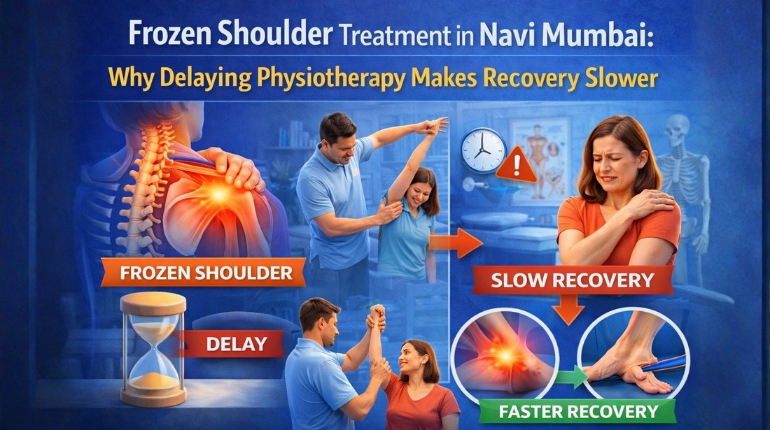
Frozen Shoulder Treatment in Navi Mumbai: Why Delaying Physiotherapy Makes Recovery Slower
Frozen shoulder is a common condition seen in physiotherapy clinics, especially in people between 40 and 65 years of age. It causes pain, stiffness, and gradual loss of shoulder movement. Many patients delay physiotherapy because pain starts slowly or seems manageable in the beginning.
From a physiotherapist’s point of view, delay in treatment is one of the main reasons frozen shoulder takes longer to recover.
What Is Frozen Shoulder?
Frozen shoulder (adhesive capsulitis) occurs when the shoulder joint capsule becomes tight and inflamed. This leads to pain and restriction of movement in all directions.
Common symptoms:
● Progressive shoulder stiffness
● Pain while lifting or rotating the arm
● Difficulty with daily activities like dressing
● Night pain, especially while lying on the affected side
Frozen shoulder usually worsens if movement is avoided.
Why Delaying Physiotherapy Is A Problem?
Frozen shoulder develops in stages. Early physiotherapy helps control stiffness. When treatment is delayed, the joint becomes tighter and recovery becomes slow.
Effect of delaying physiotherapy:
| Delay in Treatment | Effect on Recovery |
|---|---|
| Early stiffness ignored | Movement reduces further |
| Only painkillers used | Pain returns repeatedly |
| Shoulder kept inactive | Joint capsule tightens |
| Long delay | Recovery takes many months |
Patients who start physiotherapy late usually require longer treatment and more sessions.
How Physiotherapy Helps in Frozen Shoulder?
Physiotherapy focuses on controlled, stage-wise shoulder movement. Treatment is planned according to pain level and movement restriction.
Physiotherapy helps to:
● Reduce pain without forcing movement
● Improve joint mobility gradually
● Prevent further stiffness
● Restore functional shoulder use
● Speed up overall recovery
Exercises and manual techniques are progressed carefully to avoid flare-ups.
Physiotherapy Techniques Used for Frozen Shoulder
| Technique | Purpose |
|---|---|
| Manual therapy | Improves joint movement |
| Gentle stretching | Reduces stiffness safely |
| Myofascial release | Relaxes tight muscles |
| Electrotherapy | Helps control pain |
| Strengthening exercises | Improves shoulder support |
| Home exercise program | Maintains progress |
Correct timing and progression of exercises are important for good results.
Ivory Physiotherapy Clinic, Seawoods: Structured Frozen Shoulder Care
At Ivory Physiotherapy Clinic, frozen shoulder is treated using a structured and evidence-based physiotherapy approach.
Treatment is led by a trained team of physiotherapists. Each patient is assessed to identify the stage of frozen shoulder and movement limitation.
The team focuses on:
● Stage-wise treatment planning
● Safe manual therapy techniques
● Individualised exercise programs
● Regular monitoring of progress
● Clear guidance for home exercises
The goal is to restore movement safely and prevent long-term stiffness.
When Should You Start Physiotherapy?
Physiotherapy should be started when:
● Shoulder stiffness lasts more than 1–2 weeks
● Pain increases with movement
● Shoulder range is reducing
● Daily activities become difficult
Early physiotherapy leads to faster and better recovery.
Book Your Frozen Shoulder Physiotherapy Appointment
Delaying physiotherapy in frozen shoulder usually increases recovery time. Early assessment and guided treatment make a significant difference.
Schedule your appointment with Dr. Nishita Madan and the Ivory Physiotherapy team: 8591126927