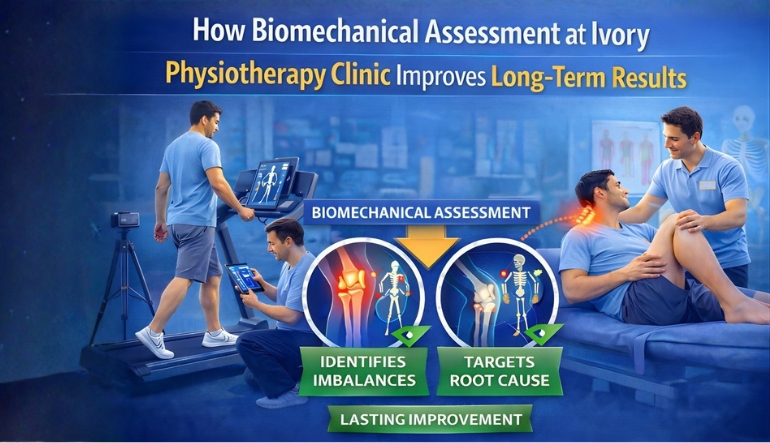
How Biomechanical Assessment at Ivory Physiotherapy Clinic Improves Long-Term Results
Many patients seek physiotherapy for pain relief. Some improve quickly, while others feel better for a short time and then experience the same pain again. From a physiotherapist’s perspective, this difference often comes down to one factor: whether biomechanics were properly assessed and corrected.
At Ivory Physiotherapy Clinic, biomechanical assessment is a core part of treatment planning because long-term recovery depends on how the body moves, not just where it hurts.
What Is a Biomechanical Assessment?
A biomechanical assessment looks at how different parts of the body move and work together during daily activities such as standing, walking, sitting, bending, and lifting.
Instead of focusing only on the painful area, the assessment evaluates:
● Joint alignment and movement
● Muscle strength and imbalance
● Posture in sitting and standing
● Walking and movement patterns
● Load distribution across joints
Pain often appears in one area, but the cause may be elsewhere.
Why Treating Pain Alone Is Not Enough?
Pain is usually a result, not the root problem. If faulty movement patterns are not corrected, pain often returns.
Example:
● Knee pain may be caused by weak hip muscles
● Back pain may be linked to poor sitting posture
● Heel pain may start due to altered walking mechanics
Without biomechanical correction, treatment becomes temporary.
How Biomechanical Problems Affect Long-Term Recovery?
| Biomechanical Issue | Long-Term Effect |
|---|---|
| Poor Posture | Repeated Muscle Strain |
| Joint Stiffness | Reduced Movement Efficiency |
| Muscle Imbalance | Uneven Load On Joints |
| Faulty Walking Pattern | Recurring Pain |
| Weak Support Muscles | Higher Injury Risk |
Correcting these issues early improves recovery quality and durability.
How Biomechanical Assessment Improves Physiotherapy Results?
Biomechanical assessment allows physiotherapists to design targeted and individualised treatment plans.
It helps by:
● Identifying the real cause of pain
● Preventing over-treatment of the painful area
● Guiding correct exercise selection
● Reducing recurrence of injury
● Improving movement efficiency
This leads to more stable and long-lasting results.
What Is Assessed During a Biomechanical Evaluation?
| Area Assessed | Why It Matters |
|---|---|
| Posture | Indicates Stress Patterns |
| Joint Mobility | Affects Movement Quality |
| Muscle Strength | Supports Joints |
| Movement Control | Prevents Overload |
| Gait (Walking) | Reveals Load Imbalance |
| Functional Tasks | Reflects Daily Demands |
This assessment guides every stage of rehabilitation.
Ivory Physiotherapy Clinic’s Biomechanical Approach
At, biomechanical assessment is integrated into routine physiotherapy care, especially for chronic and recurrent pain.
Treatment is led by along with a trained team of physiotherapists. Each patient undergoes a detailed evaluation before treatment progression.
The team focuses on:
● Understanding how pain developed
● Identifying faulty movement patterns
● Correcting alignment and load distribution
● Strengthening weak links in the movement chain
● Educating patients on daily movement habits
This structured approach improves both short-term relief and long-term outcomes.
Conditions That Benefit Most from Biomechanical Assessment
Biomechanical assessment is especially helpful in:
● Chronic neck and back pain
● Recurrent knee pain
● Postural pain in working professionals
● Sports injuries
● Heel pain and plantar fasciitis
● Post-surgery rehabilitation
These conditions often fail when treated without movement analysis.
Biomechanical Assessment vs Symptom-Based Treatment
| Area Assessed | Why It Matters |
|---|---|
| Posture | Indicates Stress Patterns |
| Joint Mobility | Affects Movement Quality |
| Muscle Strength | Supports Joints |
| Movement Control | Prevents Overload |
| Gait (Walking) | Reveals Load Imbalance |
| Functional Tasks | Reflects Daily Demands |