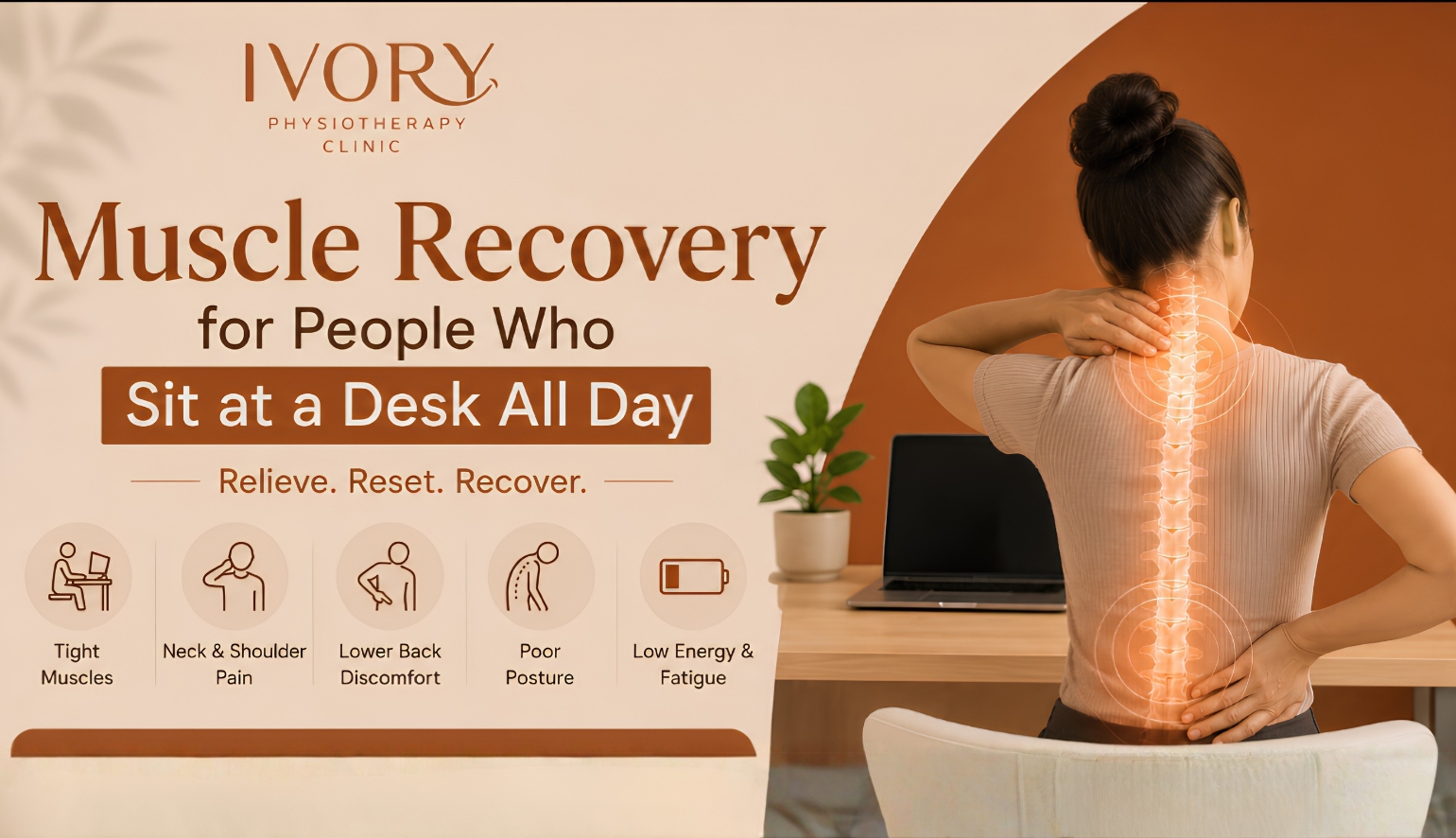
Muscle Recovery for People Who Sit at a Desk All Day
Sitting all day may seem harmless, but your muscles tell a different story. If you spend 8 to 10 hours at a desk, your muscles are working even when you're not moving. Some muscles remain constantly tight, while others become weak and inactive. Over time, this imbalance leads to stiffness, fatigue, poor posture, and chronic pain.
The good news is that muscle recovery is possible without giving up your desk job. The key is understanding why your muscles become tight and how to help them recover properly.
How Sitting All Day Affects Your Muscles
| Muscle Group | What Happens |
|---|---|
| Neck muscles | Become tight due to forward head posture |
| Shoulders | Round forward and lose mobility |
| Lower back | Experiences continuous pressure |
| Hip flexors | Tighten from prolonged sitting |
| Glute muscles | Become weak and inactive |
| Core muscles | Lose strength and stability |
These changes reduce your body's ability to move efficiently and increase the risk of pain.
Signs Your Muscles Need Recovery
| Symptom | Possible Cause |
|---|---|
| Neck stiffness | Poor workstation posture |
| Lower back pain | Weak core and prolonged sitting |
| Tight hips | Shortened hip flexors |
| Shoulder pain | Rounded shoulders |
| Fatigue after work | Muscle overload |
| Morning stiffness | Reduced mobility |
Ignoring these signs often leads to chronic musculoskeletal problems.
Why Rest Alone Is Not Enough
Many people believe that relaxing after work will solve muscle tightness. Unfortunately, muscles recover best through active movement, not prolonged rest.
| Passive Rest | Active Recovery |
|---|---|
| Temporary relief | Improves circulation |
| Muscles remain weak | Restores mobility |
| Stiffness returns | Reduces muscle tension |
| Does not improve posture | Improves movement quality |
Effective Muscle Recovery Strategies
| Recovery Method | Benefit |
|---|---|
| Mobility exercises | Reduce stiffness |
| Strength training | Reactivates weak muscles |
| Posture correction | Reduces muscle overload |
| Stretching | Improves flexibility |
| Regular movement breaks | Prevents prolonged muscle stress |
Combining these strategies provides better long term results than stretching alone.
Daily Habits That Support Muscle Recovery
| Healthy Habit | Why It Helps |
|---|---|
| Stand every 30 to 45 minutes | Reduces spinal compression |
| Walk for 2 to 5 minutes | Improves blood circulation |
| Adjust monitor height | Prevents neck strain |
| Keep feet flat on the floor | Improves posture |
| Perform strengthening exercises | Builds muscle support |
Small changes throughout the day can significantly reduce muscle fatigue.
How Physiotherapy Accelerates Recovery
Physiotherapy addresses the underlying reasons why muscles become tight and painful.
| Physiotherapy Approach | Benefit |
|---|---|
| Posture assessment | Identifies movement faults |
| Manual therapy | Relieves muscle tightness |
| Corrective exercises | Restores muscle balance |
| Strengthening programs | Improves endurance |
| Ergonomic advice | Prevents recurring problems |
Rather than simply relieving symptoms, physiotherapy restores healthy movement patterns.
Ivory Physiotherapy Clinic, Seawoods
At Ivory Physiotherapy Clinic in Seawoods, treatment for office-related muscle pain begins with a comprehensive assessment of posture, movement, muscle strength, and workplace habits.
Led by Dr. Nishita Madaan and supported by an experienced team of physiotherapists, the clinic develops individualized recovery plans that address the root cause of muscle fatigue and stiffness rather than simply masking the symptoms.
Treatment may include manual therapy, movement correction, strengthening exercises, ergonomic education, and progressive rehabilitation to help patients recover fully and prevent recurring pain.
Key Features and Benefits
| Feature | Benefit |
|---|---|
| Comprehensive movement assessment | Identifies the root cause |
| Personalized rehabilitation program | Condition specific recovery |
| Manual therapy | Relieves muscle tightness |
| Strength and mobility training | Improves posture and function |
| Team based physiotherapy care | Continuous guidance and support |
Active Recovery vs Ignoring Muscle Fatigue
| Active Recovery | Ignoring Symptoms |
|---|---|
| Better posture | Progressive muscle imbalance |
| Improved flexibility | Chronic stiffness |
| Reduced pain | Persistent discomfort |
| Higher productivity | Reduced work performance |
| Lower injury risk | Increased risk of chronic pain |
Conclusion
Desk jobs do not have to result in chronic pain.
Most office-related muscle problems develop gradually because the body remains in the same position for long periods. With the right combination of movement, strengthening, posture correction, and physiotherapy, you can recover effectively and prevent long term complications.
Schedule Appointment
Book your consultation with Dr. Nishita Madaan and the physiotherapy team
Call 85911 26927
Take the first step toward healthier muscles, better posture, and pain-free working days.