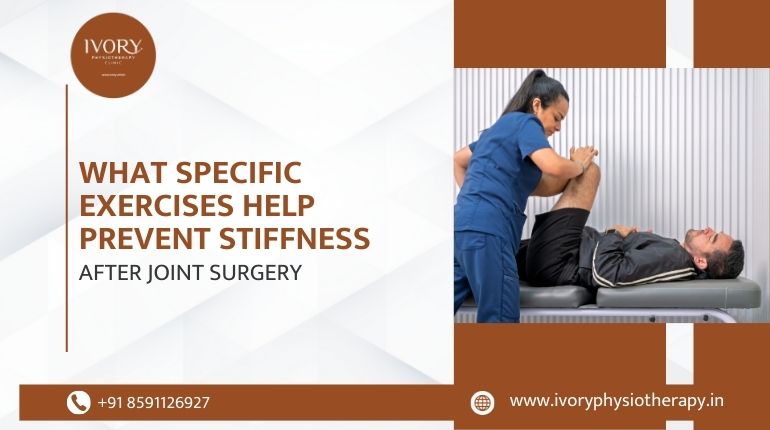
Stiffness Relief with post surgical physiotherapy in Seawoods
Recovering from joint surgery is a journey that requires patience, guidance, and the right exercises to ensure a successful recovery. Many people expect pain or discomfort after surgery, but what often surprises them most is the stiffness that settles in when the joint does not move for a few days. This stiffness can make daily activities difficult and slow down progress.
The good news is that specific exercises can help keep the joint flexible and prevent long-term tightening. If you or a loved one has recently undergone joint surgery and is seeking post surgical physiotherapy in Seawoods, understanding which exercises are most beneficial can help make your recovery safer and smoother.
At Ivory Physiotherapy Clinic, patients receive structured, supervised programs that include these exercises, allowing stiffness to be reduced early and mobility to return naturally.
Why Does Stiffness Occur After Joint Surgery
Stiffness happens for several reasons, especially when a joint has undergone trauma or repair. Some common causes include:
- Reduced movement during the healing phase
- Swelling that limits the joint’s ability to bend
- Protective muscle tightening around the operated area
- Scar tissue formation
- Fear of movement due to discomfort
This is why physiotherapists encourage early, gentle motion. The sooner the joint begins safe movement, the lower the risk of long-term stiffness.
Exercises That Help Prevent Stiffness After Joint Surgery
Different joints require different approaches, but some exercise categories are helpful across knee, hip, shoulder, and ankle surgeries. The following movements are commonly used under the supervision of a professional.
1. Range of Motion Exercises
These exercises help restore the normal movement of the joint and reduce stiffness caused by immobility.
Shoulder
- Overhead reach using the wall for support
- Arm circles in small, controlled movements
- Wand-assisted lifts for gradual elevation
Knee
- Heel slides lying on the back, slowly bending and straightening the knee
- Passive knee extension using a rolled towel under the heel
- Seated knee flexion
Hip
- Gentle hip abduction while lying
- Standing hip swings with support
- Ankle pumps to maintain circulation
The range of motion exercises should be started slowly and increased only after approval from the physiotherapist.
2. Stretching Exercises
Stretching prevents muscles around the joint from becoming tight and restricted.
Useful stretches include:
- Hamstring stretch for knee and hip surgeries
- Quadriceps stretch while lying or standing with support
- Calf stretch with the heel placed firmly on the floor
- Shoulder capsule stretch for post-shoulder surgery
These stretches help the joint regain its natural flexibility and reduce discomfort during movement.
3. Strengthening Exercises
When a joint undergoes surgery, the muscles around it often become weak. Strengthening exercises help stabilise the joint and prevent further stiffness.
After knee or hip surgery
- Straight leg raises
- Glute squeezes
- Mini squats with proper form
- Step up exercises once allowed
After shoulder surgery
- Isometric shoulder presses
- Scapular retraction exercises
- Resistance band rows
Strengthening should only begin once the joint has enough mobility and the physiotherapist confirms it is safe.
4. Circulation Improving Exercises
Better circulation helps reduce swelling, which in turn reduces stiffness.
These simple movements help a lot:
- Ankle pumps (repeatedly pointing toes up and down)
- Gentle foot circles
- Deep breathing exercises to improve oxygen flow
Improved circulation also boosts healing by delivering nutrients to the recovering tissues.
5. Balance and Coordination Exercises
Once the joint starts gaining movement, balance exercises help the body relearn proper posture and stability.
Examples include:
- Standing on one leg with support
- Side stepping
- Slow heel-to-toe walking
- Using a balance board under supervision
These exercises reduce stiffness by engaging multiple muscles around the joint.
6. Functional Mobility Exercises
These mimic everyday activities such as sitting, standing, and walking.
Some effective examples are:
- Sit-to-stand repetitions
- Controlled stair climbing
- Supported walking commands
- Using resistance bands for natural movement patterns
These help patients return to daily life comfortably and reduce the fear of movement.
7. Breathing and Relaxation Exercises
Many patients tense their muscles due to fear or discomfort. Relaxation exercises help reduce this tension.
Helpful techniques include:
- Slow deep breaths while lying down
- Relaxing the operated limb while focusing on breathing
- Guided relaxation taught by physiotherapists
Relaxed muscles move better and respond better to therapy.
Importance of Professional Guidance
Even though these exercises may seem simple, performing them without proper guidance can lead to pain, swelling, or delayed recovery. Every surgery comes with specific precautions, and every patient heals at a different pace, which is why many people looking for post surgical physiotherapy in Seawoods prefer structured, supervised sessions.
The physiotherapists at Ivory Physiotherapy Clinic design plans that:
- Support movement without straining the joint
- Progress safely as healing improves
- Include hands-on techniques to reduce tightness
- Teach patients how to move confidently at home
This customised supervision makes a significant difference in how quickly stiffness reduces.
What Affects Post Surgical Exercise Progress
Several factors determine how quickly stiffness improves:
- The type of surgery performed
- Age and general fitness level
- How early physiotherapy begins
- Presence of swelling or inflammation
- Patient’s comfort and confidence
- Lifestyle and activity levels before surgery
A good physiotherapy team monitors these aspects and adjusts the program to avoid complications.
Tips to Prevent Stiffness at Home
Along with guided exercises, the following habits help maintain flexibility:
- Follow the physiotherapist’s instructions regularly
- Keep the joint slightly elevated to reduce swelling
- Apply cold packs when advised
- Use proper support devices like walkers or slings
- Avoid sitting for long periods
- Stay hydrated for better tissue healing
Small daily habits make a major difference in how quickly mobility returns.
Frequently Asked Questions
1. When should exercises start after joint surgery
Most patients begin gentle movement within a day or two of surgery if the surgeon approves. Early movement prevents stiffness and encourages circulation. Your physiotherapist starts with very light movements before progressing to more active exercises.
2. Can I do these exercises at home without supervision
Certain movements are safe to do at home, but only after a physiotherapist teaches the correct method. Post-surgical exercises must be performed in the proper sequence to avoid strain. Doing them incorrectly can increase stiffness instead of reducing it.
3. How long does stiffness last after surgery
Stiffness often improves significantly within the first few weeks of guided physiotherapy; however, complete recovery may take several months, depending on the type of surgery. Consistency plays a major role in how quickly flexibility returns.
4. Is pain normal during these exercises
Mild discomfort is common because the joint is healing and attempting to regain its normal range of motion. Sharp or persistent pain is not normal and should be reported immediately. The physiotherapist will adjust the exercises to ensure they are comfortable and safe.
5. What if swelling increases after exercising
Swelling can increase if exercises are done too aggressively or too soon. After surgery, the joint is sensitive and needs gradual movement. Applying cold packs and elevating the limb can help reduce swelling, but it is essential to consult with the physiotherapist for further adjustments.
Helping Your Joint Heal with Confidence
Preventing stiffness after joint surgery is possible when the right exercises are started at the right time. With guided routines, consistent follow-ups, and a structured plan, patients regain flexibility, strength, and confidence much faster.
For those seeking supportive and focused post surgical physiotherapy in Seawoods, Ivory Physiotherapy Clinic provides thorough assessments, carefully planned exercises, and steady guidance to help the joint heal smoothly. With the right care, stiffness reduces, movement improves, and daily life becomes more comfortable again.