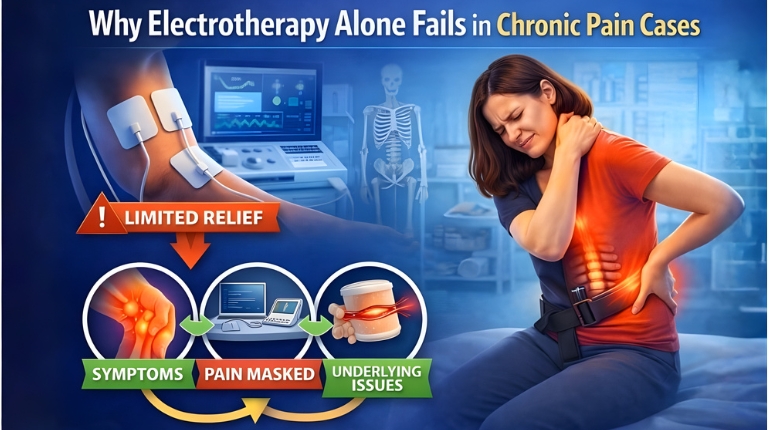
Why Electrotherapy Alone Fails in Chronic Pain Cases
Electrotherapy is commonly used in physiotherapy clinics for pain relief. Many patients with chronic neck pain, back pain, knee pain, or shoulder pain receive electrotherapy sessions and feel temporary comfort. However, a frequent complaint we hear is:
“The pain reduces for a few hours or days, but it always comes back.”
From a physiotherapist’s perspective, this happens because electrotherapy treats symptoms, not the cause. In chronic pain cases, relying on electrotherapy alone is usually not enough for long-term recovery.
What Is Electrotherapy and What Does It Do?
Electrotherapy uses electrical currents to reduce pain, relax muscles, and improve blood flow. It is useful in many conditions, especially in the early or acute phase of pain.
Electrotherapy helps to:
● Reduce pain sensation
● Relax tight muscles
● Improve local circulation
● Reduce inflammation temporarily
It plays a supportive role, not a complete treatment.
Why Chronic Pain Is Different?
Chronic pain is not just pain that lasts longer. It involves deeper problems such as:
● Muscle imbalance
● Joint stiffness
● Poor posture
● Faulty movement patterns
● Weak supporting muscles
● Nervous system sensitivity
If these issues are not corrected, pain keeps returning even after repeated electrotherapy sessions.
Why Electrotherapy Alone Fails in Chronic Pain?
Electrotherapy reduces pain signals but does not change how the body moves or functions.
Key limitations of electrotherapy alone:
| What Electrotherapy Does | What It Does Not Do |
|---|---|
| Reduces pain temporarily | Correct posture |
| Relaxes tight muscles | Improve joint mobility |
| Improves blood circulation | Strengthen weak muscles |
| Calms pain signals | Fix faulty movement patterns |
| Provides short-term comfort | Prevent pain recurrence |
This is why patients feel better briefly but do not recover fully.
Common Chronic Pain Conditions Where Electrotherapy Alone Is Not Enough
● Chronic lower back pain
● Recurrent neck pain in IT professionals
● Long-standing knee pain
● Frozen shoulder
● Plantar fasciitis
● Postural pain
In these cases, pain is usually the result of mechanical and functional problems, not just muscle tightness.
What Does Chronic Pain Actually Need?
Effective chronic pain treatment requires a combination approach.
Physiotherapy should focus on:
● Identifying the root cause of pain
● Improving joint mobility
● Correcting posture and movement habits
● Strengthening weak muscles
● Gradual load progression
● Patient education
Electrotherapy can support this process, but it cannot replace it.
Electrotherapy vs Complete Physiotherapy Care
| Electrotherapy Alone | Complete Physiotherapy |
|---|---|
| Short-term relief | Long-term recovery |
| Passive treatment | Active correction |
| Pain-focused | Cause-focused |
| No movement correction | Movement re-education |
| High recurrence | Reduced recurrence |
Chronic pain improves when the body learns to move correctly again.
Ivory Physiotherapy Clinic: Treating Chronic Pain the Right Way
Electrotherapy is never used as a standalone treatment for chronic pain. The physiotherapy team follows a structured, evidence-based approach. The Ivory Physiotherapy team focuses on:
● Detailed assessment of posture and movement
● Identifying muscle imbalance and joint restrictions
● Using electrotherapy only when required
● Combining manual therapy and exercises
● Educating patients to prevent recurrence
This approach helps patients recover function, not just feel temporary relief.
When Electrotherapy Is Useful?
Electrotherapy is effective when used:
● In acute pain stages
● To reduce pain before exercise
● Alongside manual therapy
● As support during early rehab
It should always be part of a larger treatment plan.
Your take away should be
Electrotherapy alone does not fail because it is useless. It fails when it is used in isolation for chronic pain.
Chronic pain improves only when movement, posture, strength, and habits are corrected together.
Schedule a Proper Chronic Pain Assessment
If you have been taking electrotherapy for weeks or months without lasting relief, it may be time for a complete physiotherapy assessment.
Schedule your appointment with Dr. Nishita Madan and the Ivory Physiotherapy team: 8591126927
Visit: ivoryphysiotherapy.in